Ever noticed a strange green stain on your finger after wearing jewelry? It’s a common worry for some types of jewelry. But here’s the good news: genuine, high-grade stainless steel does NOT turn the skin green.
Unlike copper and brass, stainless steel contains chromium, which helps form a protective layer that resists corrosion. Green marks are more commonly associated with copper-containing metals reacting with sweat, moisture, and substances on your skin.
In this article, we’ll explain why green marks appear, what to check if stainless steel jewelry leaves a mark, and how to choose jewelry that’s less likely to make your skin green.
Does Stainless Steel Turn Your Skin Green?
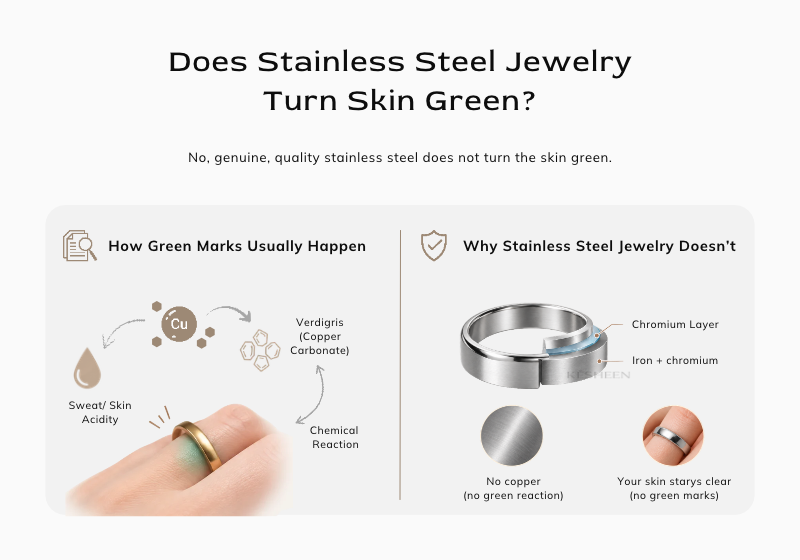
No, genuine, quality stainless steel jewelry does not turn your skin green. Here are two main reasons:
- No Copper Content: Green marks often occur when copper or brass reacts with sweat, skin acids, and oils. Stainless steel, including surgical-grade steel, is primarily made of iron and chromium, making it won’t leave green marks on your skin.
- Protective Chromium Layer: Stainless steel typically contains at least 10.5% chromium, which forms a thin, invisible layer that helps protect the metal from corrosion caused by moisture and sweat. Unlike stainless steel, brass lacks this protective layer, making it more prone to reactions that can leave green marks on your skin.
Why Might Stainless Steel Jewelry Leave a Green Mark?
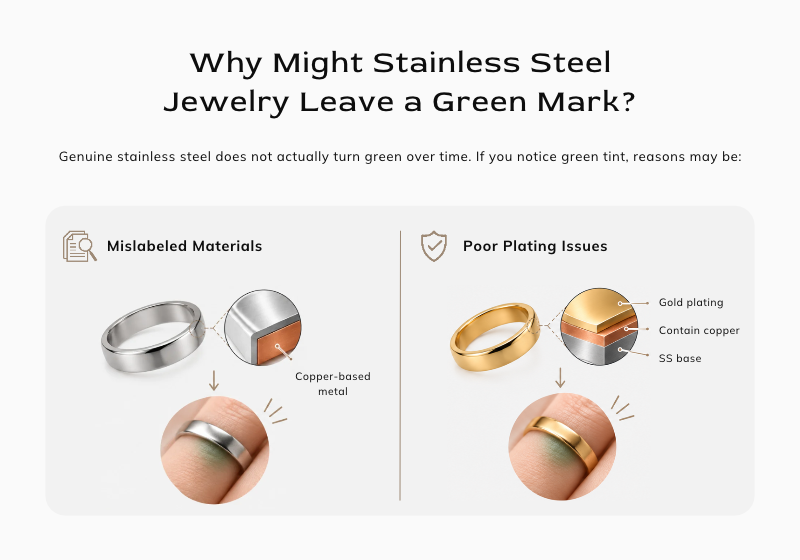
You might wonder, why does metal like stainless steel turn green over time? If your stainless steel jewelry leaves a green mark, the problem may not be the stainless steel itself. Common reasons include:
- Mixed or mislabeled materials: Some jewelry may be labeled as stainless steel but made with “mystery metals,” copper-alloy bases, or other lower-quality materials that can react with your skin.
- Plating Issues: Some electroplating systems use copper as an intermediate layer, while some jewelry may have a copper or brass base beneath a thin stainless steel coating. With daily friction, the coating can wear away, exposing the underlying metal to sweat and moisture and potentially leaving green marks on your skin.
Different Situations People Mix Up: Green Marks vs. Black Marks
Not all marks left by jewelry have the same cause. Green marks, dark stains, and skin irritation can result from different factors, so it’s important to distinguish between them.
| Situation | Possible explanation |
| Green marks on the skin | Often associated with copper-containing metals reacting with sweat, moisture, or skin products, not stainless steel |
| Black or dark marks on the skin | May result from residue, metal particles, surface deposits, or reactions involving other materials |
| Redness, itching, swelling, or a rash | May indicate irritation or an allergic reaction and should not be treated as ordinary metal staining |
Skin staining does not automatically indicate an allergic reaction or a health risk. Green or dark marks are often temporary and can usually be washed off. In contrast, an allergic reaction may cause persistent itching, redness, swelling, or a rash. If these symptoms persist or worsen, stop wearing the jewelry and seek medical advice.
What Actually Causes Jewelry, Especially Rings, to Turn Your Finger Green?
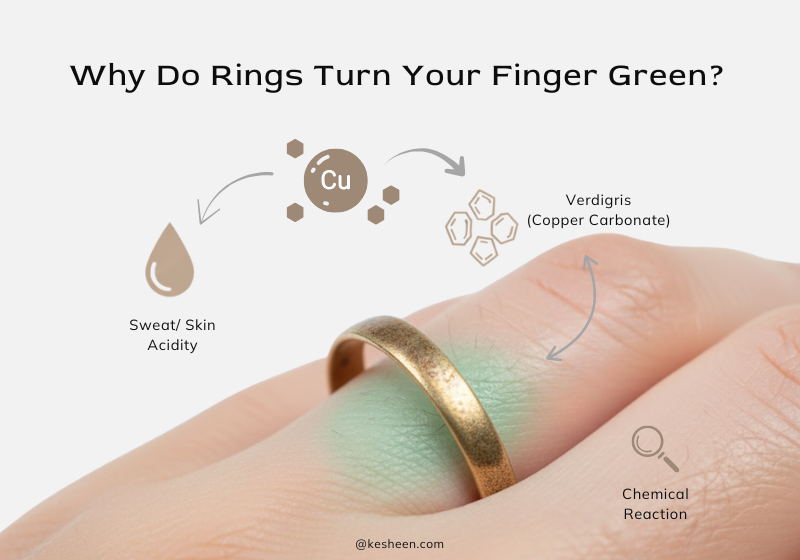
Many people assume that when their skin becomes green from wearing jewelry, the jewelry is fake. Well, that’s not the issue. Green marks usually occur when copper-containing metals react with sweat, moisture, and substances on your skin.
- Copper-Containing Metals
Copper is a common cause of green marks associated with jewelry. Brass, for example, is primarily made from copper and zinc. When copper-containing materials interact with moisture and substances on the skin, copper compounds may form and transfer to the skin’s surface.
- Sweat and Skin Chemistry
Sweat, skincare products, and individual skin chemistry can influence how quickly these reactions occur. This explains why the same piece of jewelry may leave green marks on one person but not another.ocean can strip protective layers from jewelry, making oxidation happen faster, which results in green stains.
What Jewelry Metal Does Not Turn Your Finger Green?
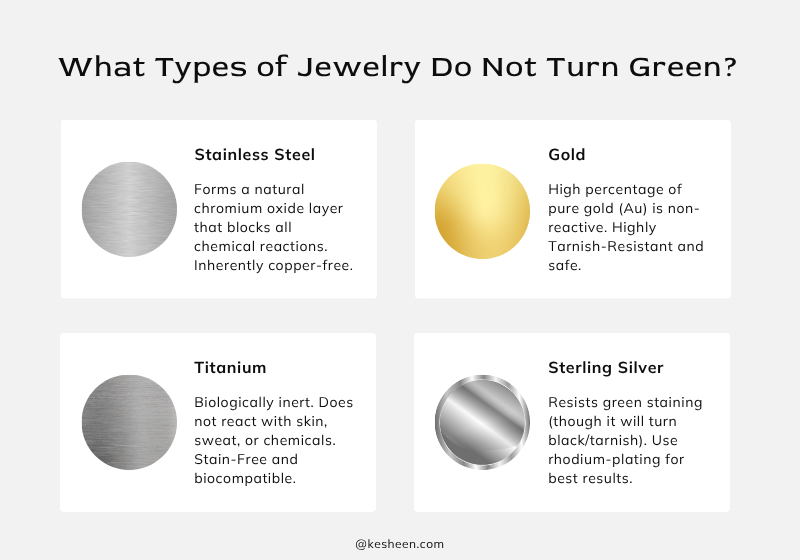
Curious about what metals do not turn your finger green or cause skin irritation, here they include stainless steel, sterling silver, gold, and titanium, as explained below:
304 and 316L Stainless Steel
If you’ve ever wondered, is stainless steel a metal for jewelry? Yes—304 and 316L stainless steel are very reliable options for making jewelry that doesn’t turn green. 316L surgical steel jewelry is especially valued for its hypoallergenic and non-reactive properties, making it ideal for everyday wear.
Sterling Silver
Will sterling silver turn your finger green? Real sterling silver rarely turns the skin green. While it can tarnish over time due to air and moisture, this tarnish is surface-level and can be cleaned with a cloth to restore its shine. With proper care and storage, sterling silver remains a safe and beautiful choice for long-term wear.
Solid Gold
Pure 24K real gold does not turn your skin green. However, gold alloys such as 10K, 14K, and 18K gold may contain copper, which can react with sweat and moisture and potentially leave green marks on your skin.
Titanium
Does titanium jewelry turn skin green? No, Titanium is highly corrosion-resistant and does not rely on copper as a main component, making it unlikely to leave green marks on your skin. It is also lightweight and widely used in jewelry, including body jewelry.
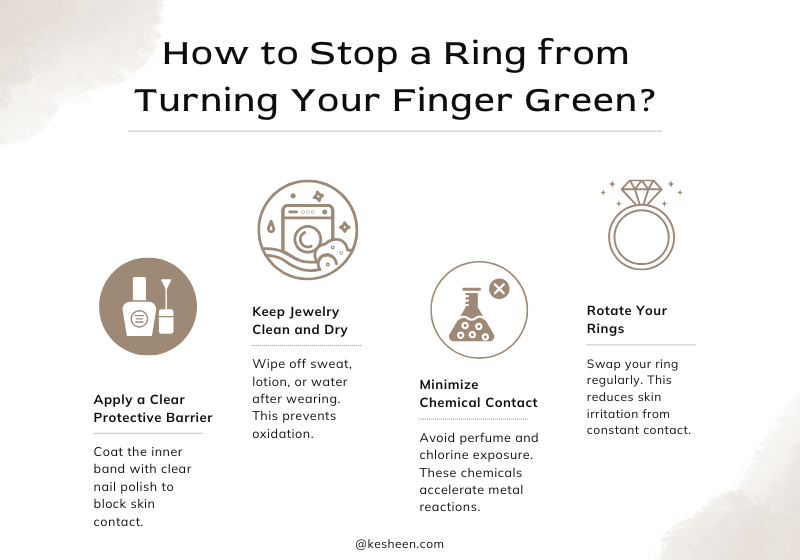
How to Stop a Ring from Turning Your Finger Green?
Green stains on fingers are usually caused by a reaction between certain metals and moisture, sweat, or chemicals. Below are easy solutions on how to stop ring from turning finger green:
- Apply a Clear Protective Barrier
Coat the inside of your ring with a thin layer of clear nail polish or jewelry shield to create a barrier between your skin and the metal. This automatically stops oxidation from happening.
- Keep Jewelry Clean and Dry
Moisture and sweat increase the reaction that causes green stains. Thus, it’s essential that you clean your rings regularly and avoid wearing them during swimming, showering, or exercising. And if you own durable jewelry you can wear in the shower, pool, or during workouts, clean and dry them thoroughly before storage.
- Minimize Chemical Contact
Lotions, perfumes, soaps, hand sanitizers, and cleaning agents can react with metals, especially brass or copper. This answers the questions: does brass jewelry turn skin green. To minimize chemical contact, apply skincare products first, then wear your jewelry once the skin is dry.
- Rotate Your Rings
Wearing the same ring everyday increases friction, moisture buildup, and oxidation. By rotating between multiple rings, you reduce stress on any single piece and give your skin time to breathe, lowering the chances of green stains.
How Small Jewelry Brands Can Reduce Customers’ Complaints about Green Skin?
Here are pro tips on how to eliminate customers’ complaints about green skin, whether you’re a new or small jewelry brand:
Choose Stainless Steel as a Core Material
Stainless is inherently non-reactive and does not turn skin green, thus eliminating the cost of customer returns, product replacements, and reputational damage caused by green stains. It can be used to make a collection of cheap jewelry that doesn’t turn green, giving you a strong marketing edge.
Use Proper Plating If Working with Brass
Brass is attractive and affordable but contains copper, which can react with the skin and make it green. If you choose to use brass, apply a top-quality plating like gold, rhodium plating, or e-coating over the brass base metal. However, if your brand targets baby jewelry or hypoallergenic-focused markets, consider avoiding brass as the core metal.
How Do We Ensure Jewelry That Doesn’t Turn Green at Kesheen?
For small and growing jewelry brands, customer complaints about “green skin” can ruin your reputation fast. You don’t need a big budget to fix it. With smart material choices and reliable coating methods, you can offer affordable jewelry that stays beautiful and skin-safe. See how we produce jewelry that doesn’t turn green at Kesheen:
Using High-Quality Stainless Steel
We begin with using high quality materials, like 304 and 316L surgical steel. Wondering—does surgical steel turn green? No, it’s copper-free and inherently resistant to corrosion, thereby eliminating the root causes of green stains.
We also ensure that the metal’s nickel release rate meets stringent international requirements (like the EU Nickel Directive and REACH), and we provide test reports for added assurance.
Applying PVD Coating and High Polishing
We carry out meticulous and several rounds of polishing to ensure a flawless, non-porous surface before PVD application, which maximizes coating adhesion.
There’s often a debate between PVD coating vs electroplating. We use the advanced PVD coating for stainless steel because it provides superior protection, making the finish highly resistant to scratching, fading, and peeling. To learn more, dive into our detailed guide on PVD coating jewelry.
Key Takeaway
In summary, does stainless steel jewelry turn skin green? The answer is NO. In fact, it’s top-choice for those who want cheap jewelry that doesn’t turn green, yet glamorous and durable. However, it’s important that you partner with a reliable custom jewelry manufacturer to ensure you get stain-free products and protect customers’ satisfaction.
FAQs
No, quality gold-plated stainless steel jewelry does not turn your skin green because stainless steel is not a copper-based alloy, and the gold plating itself does not necessarily contain copper.
However, some electroplating processes use copper as an intermediate layer. If this copper layer becomes exposed through wear, it may react with sweat and moisture, leaving green marks on your skin.
Pure, high-grade stainless steel is extremely resistant to rust, tarnish, and color change. Its rich chromium content forms a protective layer that keeps the jewelry bright, stable, and free from darkening. Over time, some stainless steel jewelry pieces may slightly turn black, but they can be restored to its steel color by simply wiping them with a clean cloth.
Yes, it will eventually turn skin green. Although, it can maintain its luster for months or a few years if properly plated and maintained. But when the thin gold plating wears out, the brass is exposed and oxidizes, causing the stain.
Yes, zinc alloy jewelry can sometimes turn your skin green. This usually happens when the alloy contains copper, which can react with sweat, moisture, or cosmetics and leave a green residue on the skin. The effect is harmless and can be reduced with proper plating and by keeping the jewelry dry.
It depends on the specific metal used, not the absence of nickel. Jewelry made from brass or copper can oxidize and cause green discoloration. But high-quality nickel free stainless steel jewelry doesn’t cause green skin.