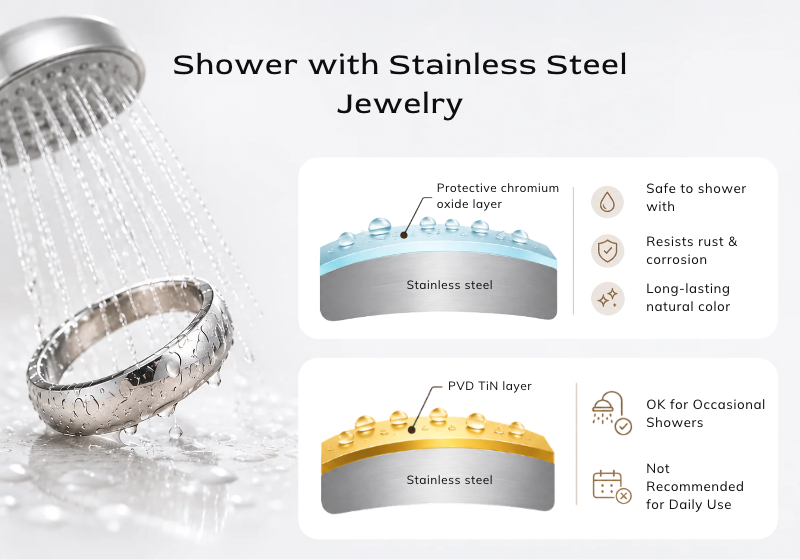
Yes, you can shower with solid stainless steel jewelry, especially pieces made from 304 or 316L stainless steel. Stainless steel jewelry can also get wet without immediate damage because its protective chromium oxide layer helps resist rust and corrosion.
Gold PVD-coated stainless steel jewelry can tolerate occasional showers, but removing it before bathing can help preserve its finish. Here’s what you should know about showering with stainless steel jewelry and how to keep your pieces looking their best.

Can You Wear Stainless Steel Jewelry in the Shower?
Yes, you can safely shower with solid stainless steel jewelry. Both 304 and 316L stainless steel jewelry are highly resistant to rust and corrosion, making them suitable for everyday exposure to shower water.
Stainless steel contains at least 10.5% chromium, which forms a thin, protective chromium oxide layer on the metal’s surface. This passive layer helps protect the underlying steel from moisture and corrosion.
Under normal showering conditions, water, steam, and mild soaps are unlikely to damage solid stainless steel jewelry. Its natural metallic color won’t fade or wear off like a coating, although soap residue and mineral deposits may make the surface appear dull over time. Regular cleaning can help restore its shine.
Can You Shower with Gold Plated Stainless Steel Jewelry?
Gold-plated stainless steel jewelry can generally withstand occasional showers, but regular showering is not recommended if you want to preserve its gold finish for as long as possible.
While the stainless steel base is highly resistant to water and corrosion, repeated exposure to shower products and daily friction can gradually dull or wear down the gold coating. How long the finish lasts also depends on the coating method, wearing habits, and proper care.
Gold PVD vs. Electroplating: Which Holds Up Better in the Shower?
Gold PVD Coating: PVD (Physical Vapor Deposition) uses a vacuum deposition process to create a strongly adhered coating on the stainless steel surface. It typically incorporates a hard titanium nitride (TiN) layer, which improves surface hardness and wear resistance. This helps the gold finish withstand daily friction and water exposure more effectively.
Gold Electroplating: Traditional gold electroplating, also known as water plating, uses an electrochemical process to deposit a thin layer of gold onto the stainless steel surface. Compared with PVD coating, it is generally less resistant to wear, making the gold finish more prone to fading or rubbing off over time. For more details, read our guide on PVD coating vs. electroplating for stainless steel jewelry.
Neither gold coating is completely wear-proof. To maintain the gold finish for as long as possible, it’s best to remove gold-plated stainless steel jewelry before showering. If you do wear it in the shower, rinse off any soap residue with clean water and dry it thoroughly with a soft cloth afterward.
What Can Affect Stainless Steel Jewelry During Showering?
While normal shower water is generally safe for stainless steel jewelry, certain shower products and conditions can affect its appearance over time, especially for gold-coated pieces.
| Shower Factors | Solid Stainless Steel | Gold PVD-Coated Steel |
| Soap, Shampoo & Conditioner | Residue may reduce shine | Buildup may dull the finish |
| Exfoliating Scrubs | May cause fine scratches | Can accelerate coating wear |
| Hair Dye & Bleach | Strong chemicals may cause discoloration | May damage or discolor the coating |
| Hot Water & Steam | Generally safe | Generally safe |
| Hard Water | May leave mineral deposits | Deposits may reduce shine |
Most everyday shower conditions are unlikely to damage solid stainless steel jewelry. For gold-coated pieces, abrasive products and harsh chemicals pose greater risks to the finish, while soap residue and hard-water deposits mainly affect its appearance.
Shower vs. Pool vs. Ocean: Is Stainless Steel Jewelry Safe?
Not all water environments affect stainless steel jewelry the same way. While normal shower water is generally safe, chlorine in swimming pools and salt in seawater can pose additional risks, especially for gold-coated pieces.
| Water Environment | Solid Stainless Steel | Gold PVD-Coated Steel |
| Daily Shower | Generally safe | Occasional showers OK; remove for daily use |
| Swimming Pool | Generally safe rinse afterward | Best to remove |
| Ocean & Beach | Generally safe; rinse afterward | Best to remove |
| Hot Tub / Spa | Generally safe; rinse afterward | Best to remove |
Both 304 and 316L stainless steel jewelry can withstand exposure to different water environments. Gold PVD-coated jewelry can also tolerate occasional water exposure, but removing it before swimming helps preserve the finish, as pool chemicals, saltwater, and sand can gradually cause wear.
For a closer look at how stainless steel performs in different water conditions, read our guide on is stainless steel jewelry waterproof.
Care & Best Practices for Wearing Stainless Steel Jewelry in Shower Water
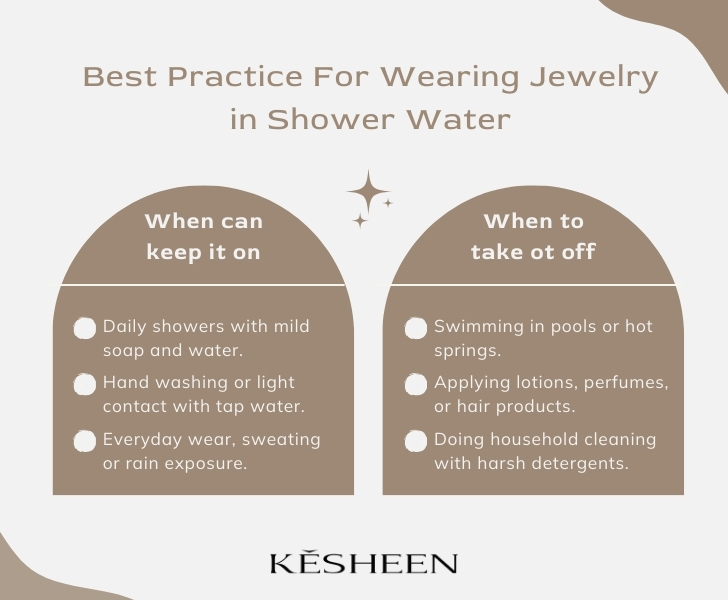
Although stainless steel jewelry is highly water-resistant, proper care can help maintain its appearance and extend its lifespan. A few simple habits can also help protect the finish of gold PVD-coated pieces.
When You Should Take It Off
- Before relaxing in hot springs or bathing with chlorinated water.
- Before applying lotions, perfumes, or hair products.
- Before doing household cleaning with bleach or harsh detergents.
- Before an abrasive spa treatment like salt scrub.
When You Can Keep It On
- Daily showers with mild soap and water.
- Hand washing or light contact with tap water.
- Everyday wear, including sweating or in the rain.
- Causal workout and sport activities.
After Care Best Practices
- Rinse jewelry briefly after showering to remove soap or shampoo residue.
- Pat dry with a soft cloth to prevent water spots.
- Occasionally deep clean with mild soap and a microfiber cloth.
- Store in a dry pouch or jewelry box when not worn.
Conclusion
So, can you shower with stainless steel jewelry? In most cases, yes. Uncoated 304 and 316L stainless steel can withstand normal shower water, while it’s best to remove gold PVD-coated pieces before showering to help preserve their finish.
After showering, simply rinse off any residue and dry your jewelry with a soft cloth to maintain its shine and keep it looking its best.
FAQs
Yes. Solid 304 and 316L stainless steel jewelry can get wet during everyday activities such as handwashing, showering, or walking in the rain without immediate damage. Gold PVD-coated pieces can also tolerate occasional water exposure, but frequent exposure is best avoided to preserve their finish.
No, uncoated stainless steel jewelry does not tarnish like silver or brass. It is highly resistant to tarnishing and rust during normal water exposure, thanks to its protective chromium oxide layer.
No, quality stainless steel jewelry is unlikely to turn your skin green, even when wet. Green discoloration is more commonly associated with copper-containing metals, while some coatings or mixed-metal components may also contribute. For more details, see why some jewelry turns your skin green and whether stainless steel does.