Does surgical steel tarnish? Generally, no. Solid 316L surgical steel jewelry is highly resistant to tarnishing and corrosion under normal wearing conditions. Its chromium content helps form a protective oxide layer that resists corrosion and oxidation.
In this guide, we’ll explain why 316L stainless steel resists tarnishing, whether gold surgical steel can fade, how exposure to water and everyday wear affects it, and how to care for your jewelry.

What Is 316L Surgical Steel Jewelry?
316L surgical steel jewelry is made from 316L stainless steel, an extra-low-carbon austenitic alloy known for its strength, durability, and corrosion resistance. It is an alloy that’s largely made of iron, 16-18% of chromium, 10-14% of nickel, and a little quantity of molybdenum (2-3%).
The “L” stands for low carbon (maximum 0.03%), which helps reduce carbide precipitation during welding and maintain corrosion resistance.
Does 316L Surgical Stainless Steel Jewelry Tarnish?
No. 316L surgical stainless steel jewelry generally does not tarnish under normal wearing conditions. Unlike sterling silver, which can darken through a reaction with sulfur compounds in the air, 316L forms a protective chromium oxide layer that helps resist corrosion and discoloration.
Its alloy composition provides strong resistance to oxidation and corrosion, helping maintain its original appearance over time. It is among the top choices when you’re looking for what types of jewelry do not tarnish.
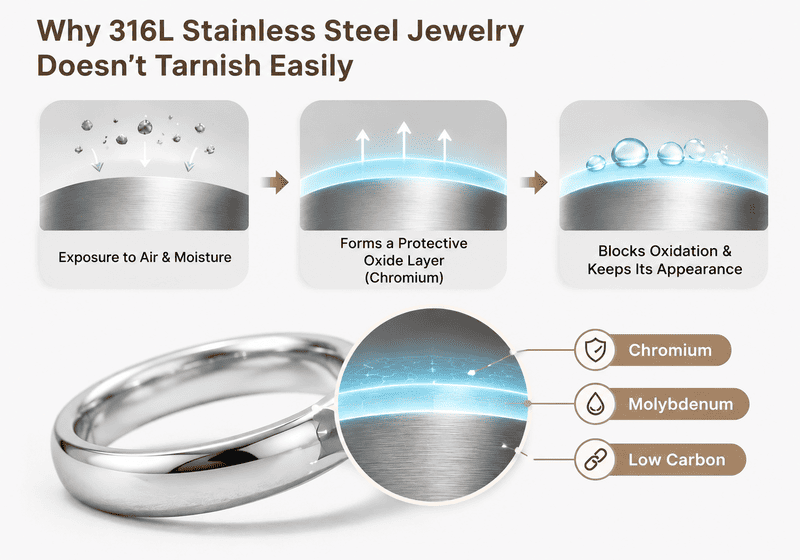
Why Does 316L Stainless Steel Resist Tarnishing?
- Chromium (16–18%): Forms a thin, self-repairing protective oxide layer that helps prevent oxidation and corrosion.
- Molybdenum (2–3%): Improves resistance to pitting and crevice corrosion, particularly from chlorides found in sweat, saltwater, and pool environments.
- Low Carbon (L Grade): Its low carbon content (maximum 0.03%) helps reduce carbide precipitation during welding, supporting corrosion resistance around welded areas.
When Can 316L Stainless Steel Jewelry Look Discolored?
Although 316L stainless steel jewelry is highly resistant to tarnishing and corrosion, its appearance may change under certain conditions. Here are some common situations, their possible causes, and what you can do.
| What You May Notice | Possible Cause | What to Do |
| Dull or cloudy appearance | Residue from sweat, skincare products, or soap | Clean with mild soap and water, then dry thoroughly |
| Small spots after swimming | Salt or chlorine residue on the surface | Rinse with fresh water and dry after |
| Discoloration around joints or crevices | Trapped moisture or chemical residue | Clean hard-to-reach areas and keep jewelry dry |
| Orange or reddish stains | Iron contamination or surface corrosion | Clean gently and check for recurring spots |
| Gold color peeling | Wear or damage to the gold coating | The gold layer peels, but the steel base is fine |
| Green marks on skin | Copper-containing metals or worn plating | Check the base material, the steel itself does not turn skin green |
Keep in mind: Surface buildup and coating wear are not the same as stainless steel tarnishing. Genuine 316L stainless steel is highly resistant to tarnishing, and changes in appearance do not necessarily mean the underlying metal is corroding.
Does Surgical Steel Rings, Bracelets, Necklaces, and Rings Tarnish?
Genuine, high-quality surgical steel jewelry rarely tarnishes under normal wearing conditions thanks to the natural tarnish resistance of stainless steel. However, different jewelry types experience varying levels of friction, with rings being the most prone to scratches, surface dullness, and coating wear.
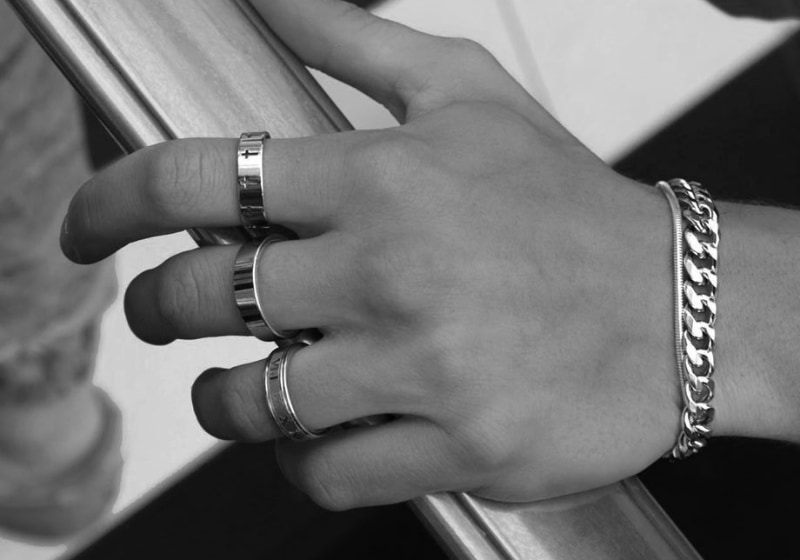
- Rings: Experience the most friction from frequent contact with hard surfaces, objects, and daily activities. Scratches and coating wear are more likely, especially on the underside.
- Bracelets: Regularly rub against desks, clothing, and other surfaces. The inner surface and edges are more prone to scratches and coating wear. Exposure to water, soap, and sweat can also leave residue.
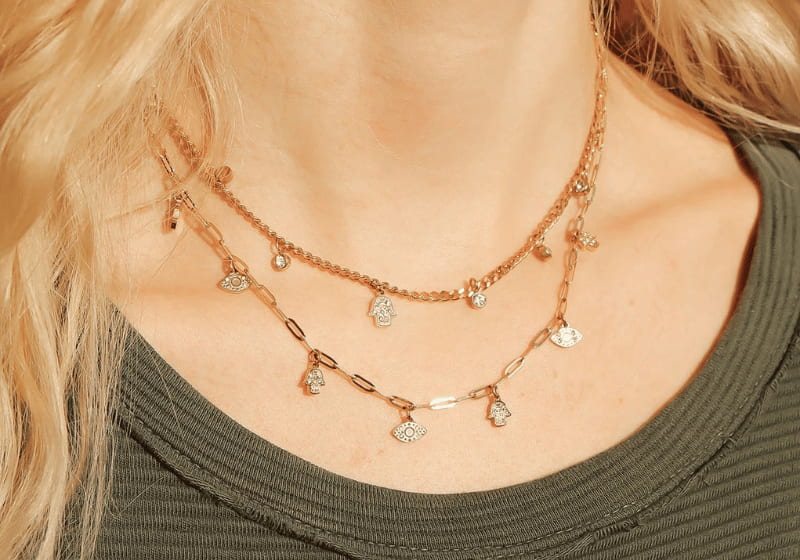
- Necklaces and Chains: Generally experience less friction, although chain links may rub against each other. Clasps and contact points can show wear, while perfume, lotions, and sweat may leave surface residue.
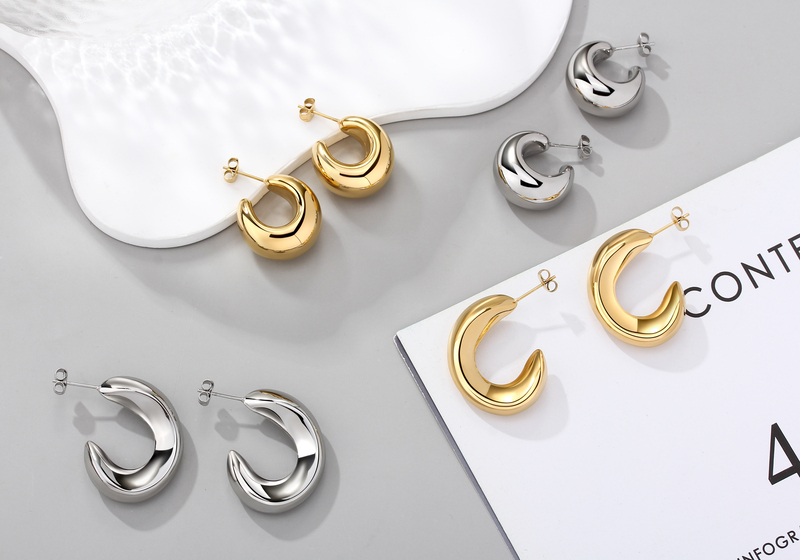
- Earrings: Typically experience the least friction and retain their appearance longer. However, posts and backs can accumulate sweat, oils, and product residue.

Does Gold Surgical Steel Jewelry Tarnish or Fade?
Yes, gold surgical steel jewelry can eventually fade or lose its original appearance. While the 316L stainless steel base resists corrosion, the durability of the gold finish depends on the coating method, quality, and wearing conditions.
- PVD Gold Coating: Offers strong resistance to fading, scratches, and everyday friction, typically maintaining its appearance for 1–2 years with proper care.
- Traditional Gold Electroplating: Generally wears faster, especially on high-friction areas such as rings and clasps, gradually exposing the steel underneath.
Harsh chemicals and frequent friction can accelerate coating wear, but this doesn’t mean the stainless steel base is tarnishing. To learn more, explore our full guide on Does gold stainless steel tarnish?
Does Surgical Steel Jewelry Rust?
Genuine, high-quality 316L surgical steel jewelry rarely rusts under normal wearing conditions. Its protective chromium oxide layer provides excellent resistance to rust and corrosion, but it is not completely immune.
Prolonged exposure to chlorides, especially in areas where moisture gets trapped and oxygen is limited, can damage this protective layer and cause localized corrosion, such as pitting or crevice corrosion.
If you notice reddish-brown rust spots, they may indicate lower-grade or mislabeled steel, or corrosion under harsh conditions.
Is Stainless Steel the Same as Surgical Steel Jewelry?
Not exactly. While both belong to the stainless steel family, surgical steel—specifically 316L—is a refined, hypoallergenic version with superior resistance to tarnish and corrosion. Explore the pros and cons of stainless steel, and examine this table to see the comparison between stainless steel vs surgical steel jewelry:
| Feature | 304 Stainless Steel | 316L Surgical Steel |
| Hypoallergenic | Yes | Highly Sensitive |
| Corrosion Resistance | Excellent | Excellent |
| Tarnish Resistance | Excellent | Excellent |
| Jewelry Applications | General fashion jewelry | Body jewelry, earrings, premium jewelry |
| Cost | Lower | Slightly higher but worth the performance |
| Durability for Daily Wear | High | Higher |
Benefits of Surgical Steel Jewelry
Surgical steel jewelry offers numerous advantages that make it an excellent choice for people seeking durable and beautiful accessories.
- Resistance to Corrosion and Tarnishing
The chromium content and the PVD gold coating method make it capable of withstanding corrosion and tarnishing. The jewelry becomes tough and creates a protective oxide layer to fight against rust, discoloration, and deterioration.
- Ideal for Sensitive Skin Customers
316L surgical steel is generally well tolerated by many people. Although it contains approximately 10–14% nickel, it is considered safe for skin contact when the amount of nickel released from the finished jewelry meets the required safety limits.
- Durability
The hardness and strength of the alloyed metals (iron, chromium, nickel, and molybdenum) resist scratches, dents, and deformation. This durability makes it ideal for everyday wear without losing its shape or appearance.

How to Clean Surgical Steel Jewelry?
316L stainless steel jewelry is relatively easy to maintain. Regular cleaning helps remove sweat, oils, dust, and everyday residue. Here’s a simple cleaning routine:
- Step 1: Prepare Soapy Water
Fill a small bowl with warm water and add a few drops of non-abrasive soap.
- Step 2: Soak the Jewelry
Deep the jewelry into the soapy water and leave it for 10-15 minutes.
- Step 3: Gently Brush
Use a soft-bristled brush to gently scrub the jewelry to remove stubborn stains.
- Step 4: Rinse and Dry
Thoroughly rinse the jewelry under clean, running water, and pat dry with a soft, lint-free cloth.
- Step 5: Polish and Store
For extra shine, polish the jewelry with a microfiber cloth using circular motions, and store in a clean, dry jewelry box.
Tip: If you’re also wearing gold-plated stainless steel pieces, consider learning the best practices for brands and consumers to keep gold plated ss from tarnishing so your entire collection stays looking fresh and polished.

As Jewelry Brands: What Types of Jewelry Are Highly Recommended for Surgical Steel?
Surgical steel’s unique properties make it particularly well-suited for specific types of jewelry, especially in cases where other metals cannot be used, such as:
Body Jewelry and Piercings
Surgical steels are medical-grade certified and the best metal for piercing jewelry. They are safe for fresh piercings and long-term wear in sensitive parts of the body. Their non-porous surfaces prevent bacterial growth and improve proper healing.
Jewelry for Kids and Babies
Kids and babies are more prone to metal sensitivities, but surgical steel’s hypoallergenic properties ensure there is no reaction. The metal’s toughness makes it resistant to damage from rough play or exposure to water.
Permanent Jewelry
Surgical steel is also applicable in jewelry pieces where the parts are welded or soldered to eliminate the need for clasps. The metal’s strength prevents breaking or weakening at connection points, while its hypoallergenic properties allow for comfortable long-term wear.
Earrings
Earrings made from 316L stainless steel are best for sensitive ears or new piercings. The metal’s smooth surface and biocompatibility reduce irritation and promote healing. One common question people ask is, “do surgical steel earrings tarnish?” — the answer is no. Thanks to the chromium layer, surgical steel earrings resist tarnishing even with daily wear, making them ideal for long-term use.
Conclusion
So, does 316L surgical steel jewelry tarnish? Generally, no. Its chromium-rich composition helps form a protective passive layer, making it highly resistant to corrosion and tarnishing under normal wearing conditions.
However, gold surgical steel jewelry is different. While the 316L base provides corrosion resistance, the gold-colored surface finish may gradually wear or fade depending on the coating method, quality, and wearing conditions.
Thus, it’s advisable you buy from a professional custom jewelry manufacturer with verifiable experience in producing quality.
FAQs
Yes, stainless steel jewelry is tarnish-free. Its chromium content forms a protective layer that prevents oxidation, keeping the surface shiny and untarnished even with daily wear and minimal maintenance.
Yes. Solid 316L stainless steel is waterproof and can withstand everyday exposure to water, including showering, swimming, and handwashing. Over time, its surface may look slightly dull due to residue or buildup, but a quick wipe with a soft cloth can usually restore its shine.
Yes, you can wear surgical steel jewelry in the shower. It is also one of the best jewelry to wear in the pool and ocean. The metal’s corrosion resistance enables it to withstand water and shower products. However, avoid immersing in soapy water for a long time.
For 316L stainless steel without coating, it can last a lifetime. For PVD coated 316L steel, it can last at least 2 years without tarnishing or fading as long as it’s properly maintained.