The type of jewelry chain you buy should not be solely influenced by style. It’s important that you consider other factors like durability and long-term value.
In this guide, we’ve collated a list of the 10 strongest chain types (in order of their strength). Understanding how different they are, their pros, cons, and when they are best-suited will help you make smarter buying decisions.
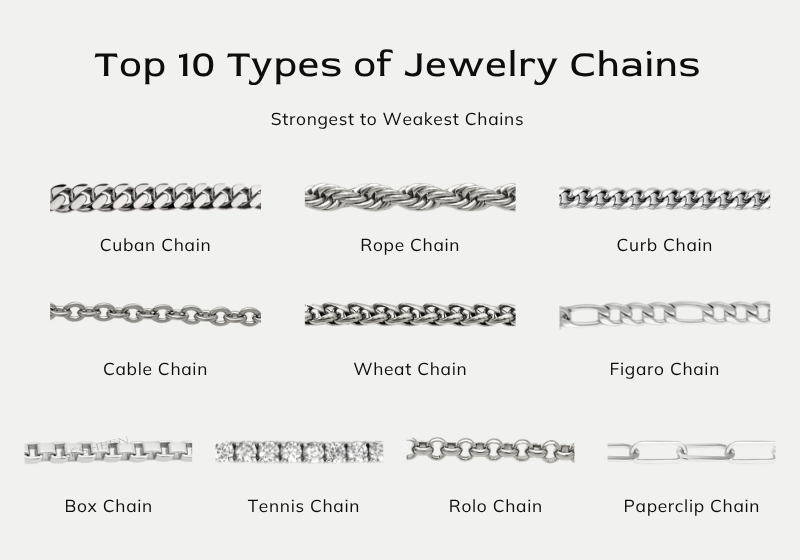
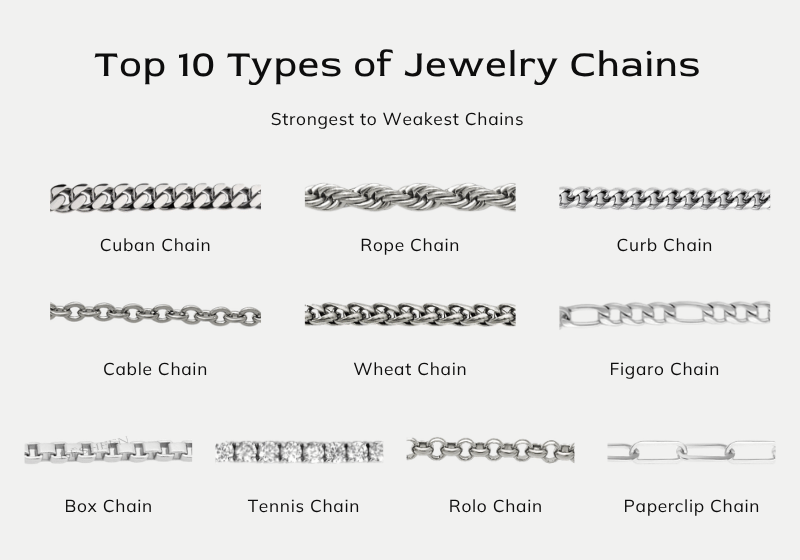
Top 10 Types of Jewelry Chains (Strongest to Weakest Chains)
Before we go further to explore the top 10 strongest types of jewelry chains, this is how they compare with one another.
| Chain Type | Durability | Suitable For |
| Cuban Chain | ⭐⭐⭐⭐⭐ | Bold designs, heavy pendants |
| Rope Chain | ⭐⭐⭐⭐⭐ | Large pendants, luxury pieces |
| Curb Chain | ⭐⭐⭐⭐⭐ | Everyday wear, versatile styles |
| Cable Chain | ⭐⭐⭐⭐ | Minimalist designs, layering |
| Wheat Chain | ⭐⭐⭐⭐ | Elegant looks, medium pendants |
| Figaro Chain | ⭐⭐⭐⭐ | Casual and dressy styles |
| Box Chain | ⭐⭐⭐⭐ | Minimalist, dainty pendants |
| Tennis Chain | ⭐⭐⭐ | Formal looks, luxury designs |
| Rolo Chain | ⭐⭐⭐ | Casual wear, flexible styling |
| Paperclip Chain | ⭐⭐⭐ | Trendy, light to medium pendants |
1. Cuban Chain
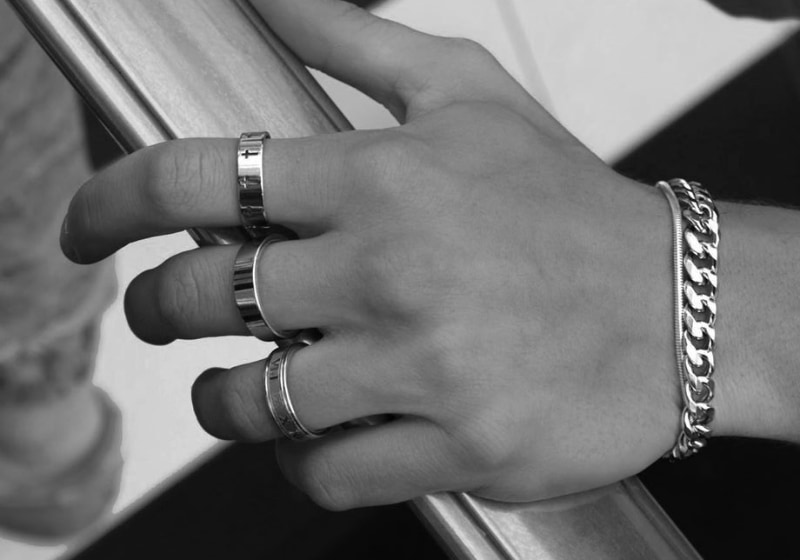
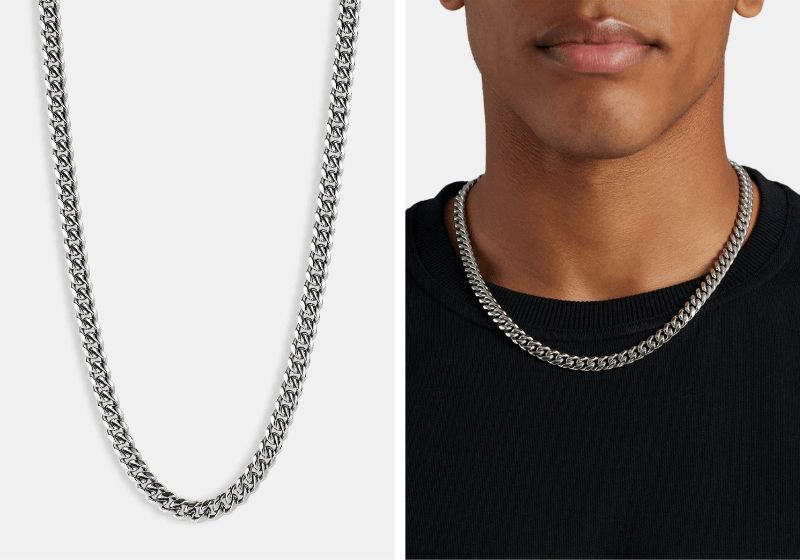
This is the strongest type of necklace chain, popularly known for its thick, tightly interlocking oval links. It has a dense construction that distributes tension evenly and reduces weak points that could lead to breakage. The solid feel and resistance to tangling make it a great choice for everyday wear.
Pros
- Excellent resistance to tangling and twisting
- Maintains shape even under frequent use
- Works well with large, statement pendants
Cons
- Can feel bulky on smaller necks
- More expensive due to its weight and width
Best For
- Holding heavy pendants securely
- Bold, statement jewelry styles
2. Rope Chain
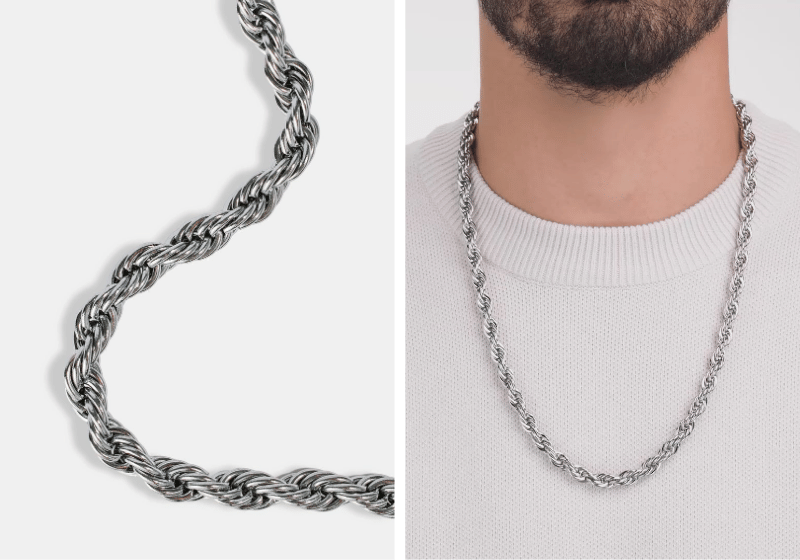
The rope chain features multiple metal strands twisted together to mimic the look of a rope. It has an intricate design that enhances its strength and distributes stress across several links rather than a single point. Also, its textured surface reflects light from multiple angles, giving it a distinctive visual appeal.
Pros
- Excellent flexibility without compromising durability
- Holds up well under constant movement
- Beautiful light reflection and sparkle
Cons
- Can be difficult to repair if damaged
- May trap dirt between twisted links; hard to clean
Best For
- Both pendants and standalone wear
- Stylish, eye-catching jewelry pieces
3. Curb Chain
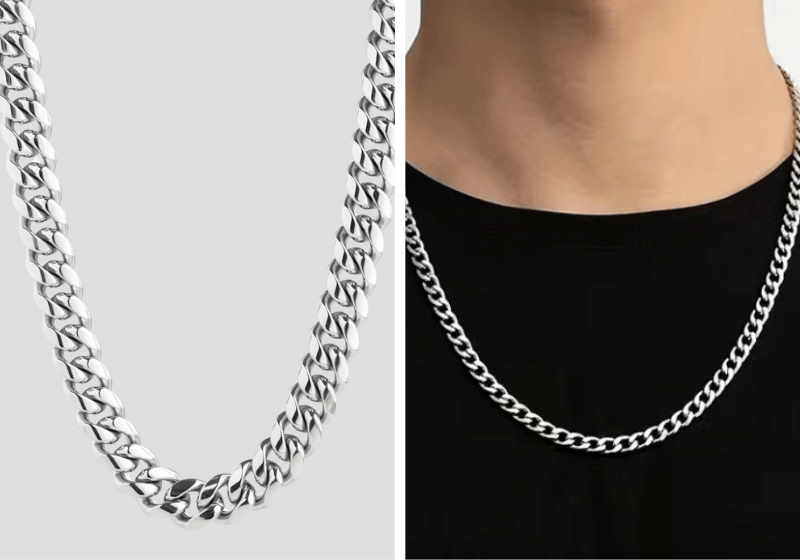
This is another top-rated option among the different types of chain links that consists of interlocking links. The links lie flat on the skin, creating a smooth and uniform surface. It is compactly structured, thereby minimizing movement between links and reducing stress points. While not as thick as Cuban chains, it still offers reliable strength for regular use.
Pros
- Clean, classic appearance
- Balanced weight without excessive bulkiness
- Minimal snagging on clothing
Cons
- Less durable compared to heavier interlocking chain links, like Cuban
- Links can twist if not well-maintained
Best For
- Casual and formal outfits
- Lightweight to medium-weight pendants
4. Cable Chain
The cable chain is one of the most common and straightforward jewelry chain types. It’s made from uniform round or oval links that are connected in a simple pattern. The simplicity makes it widely used, though it is not always strong. Thinner versions are prone to bending or breaking under tension, while thicker ones provide moderate durability.
Pros
- It has a simple design, which allows for easy repairs
- Timeless; doesn’t go out of style
- Lightweight and comfortable for daily wear
Cons
- Weaker when links are thin
- Prone to bending under pressure
Best For
- Minimalist jewelry styles
- Layering of different jewelry
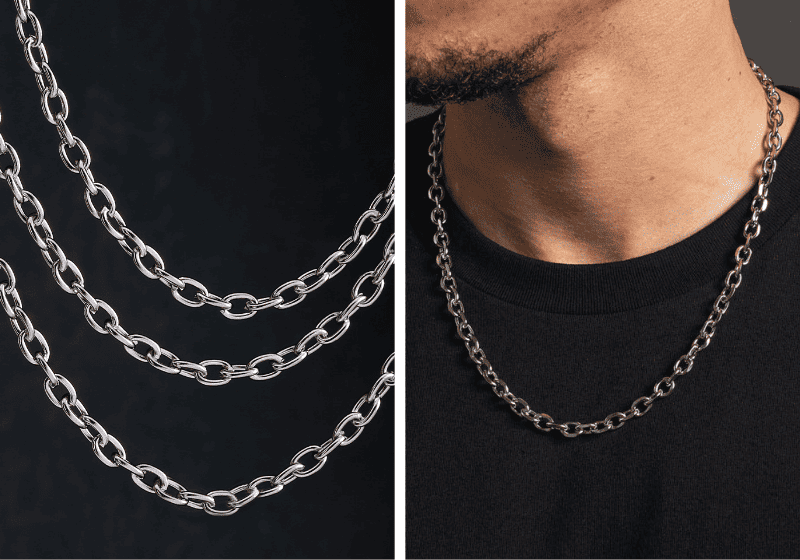
5. Wheat Chain
The wheat chain (also known as Spiga chain), is composed of interwoven oval links braided together in a symmetrical pattern. From a distance, it can look like a rope chain. Its construction creates multiple connection points, enhancing its overall strength and durability. This chain offers a smooth texture with limited kinking, making it reliable for regular wear.
Pros
- Provides a solid balance between flexibility, resilience, and elegance
- Links are less-likely to break from tugs or pulls
- Maintains a refined, polished look over time
Cons
- Harder to clean than basic jewelry chain types
- Repairs can be complex
Best For
- Elegant, refined jewelry styles
- Medium-weight pendants
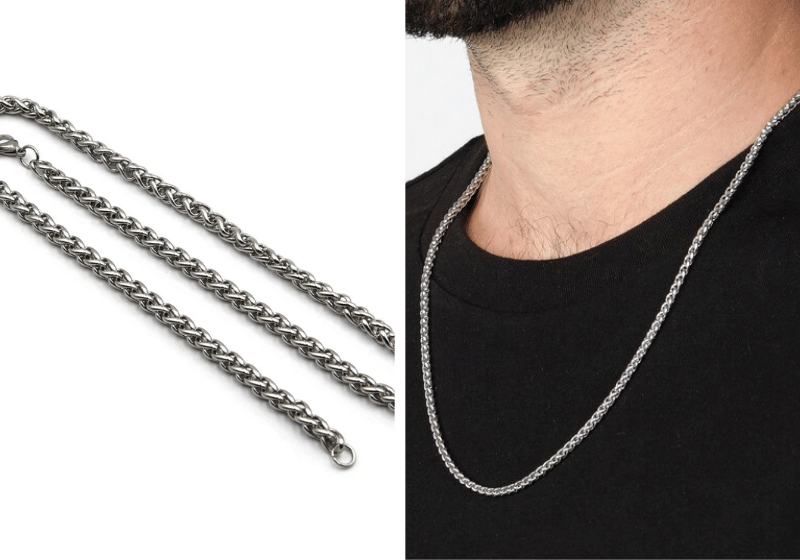
6. Figaro Chain
The Figaro chain features a distinctive pattern of three small circular links followed by an elongated oval link, thereby creating a balanced combination of style and structural integrity. While not as dense as Cuban or rope chains, its varied link design helps distribute tension more effectively than simpler chains. This gives it moderate durability suitable for everyday wear.
Pros
- Stylish, distinctive pattern
- Good balance between weight and flexibility
- Comfortable to wear for extended periods
Cons
- Not good for heavy pendants
- May twist during rigorous activities
Best For
- Casual, everyday jewelry
- Subtle statement pieces
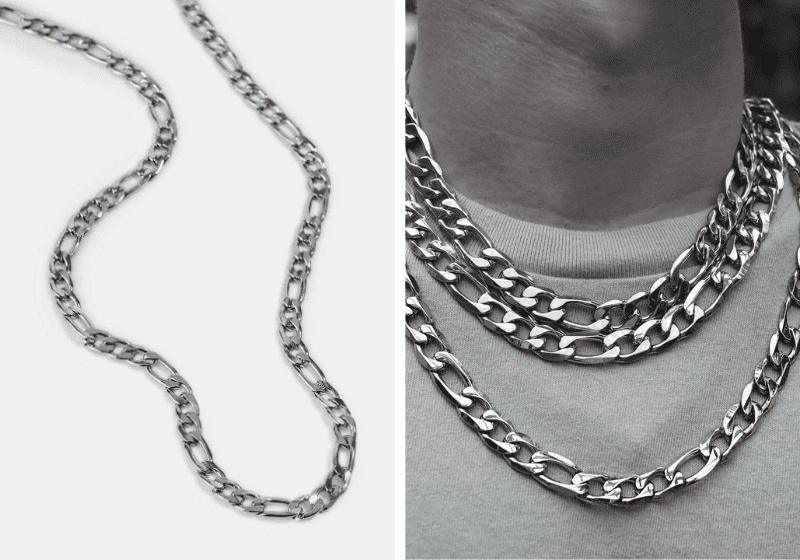
7. Box Chain
The box chain has many other names, such as briolette chain, book chain, and Venetian chain. It’s typically made from square-shaped links that connect to form a smooth, continuous structure. Its geometric design provides better strength than many simple chains because each link supports the next with minimal gaps. However, thin box chains can still be prone to kinking if bent sharply.
Pros
- Smooth, uniform appearance
- Resistant to tangling and twisting
- Flexible without excessive twisting
Cons
- Difficult to repair once damaged
- Feels stiff compared to flexible types of jewelry chains, like rope or wheat chain
Best For
- Minimalist, modern styles
- Lightweight to medium-weight pendants
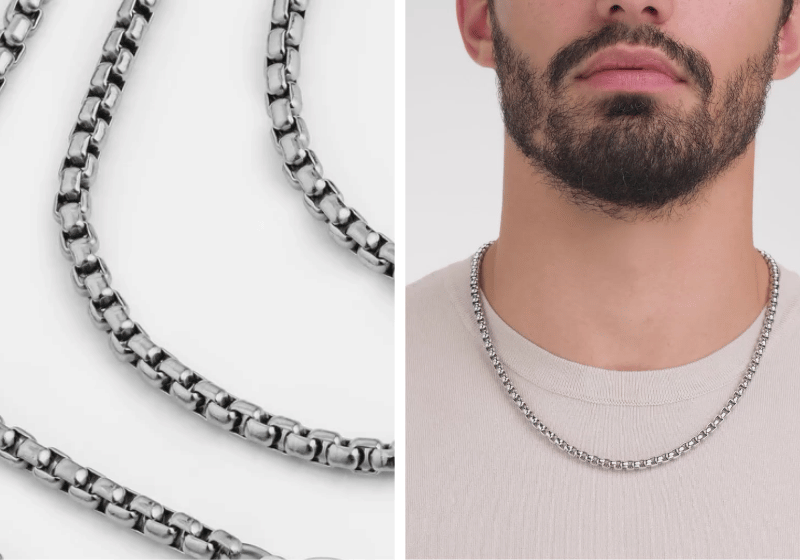
8. Tennis Chain
The tennis chain is designed with a continuous line of individually set gemstones connected by small metal links. It gives the entire neckline an attractive and timeless look, however, it’s not very durable. The multiple connection points can become weak under tension, especially if settings loosen over time.
Pros
- Timeless design with lasting appeal
- Flexible for comfortable movement
- Fits perfectly in both jewelry chain and gemstone collections
Cons
- Susceptible to damage under tension
- High cost due to gemstone setting
Best For
- Formal occasions
- Statement jewelry without pendants
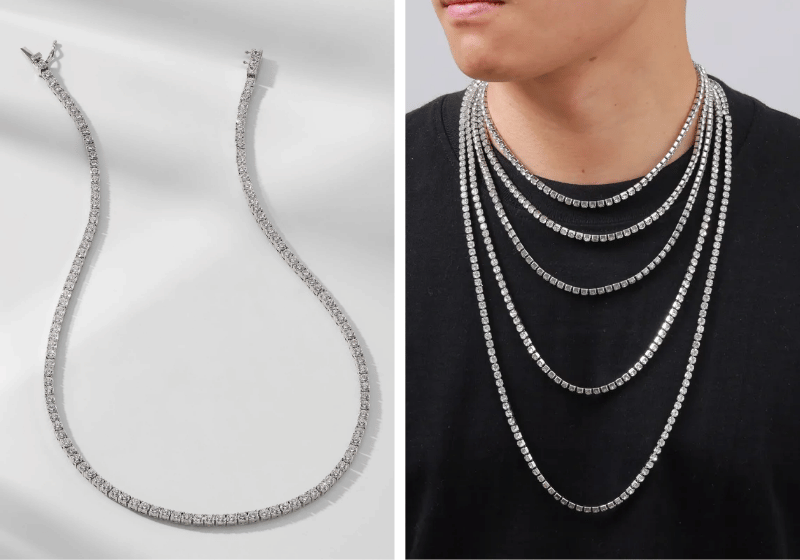
9. Rolo Chain
The rolo chain (also known as belcher chain) is a re-design of cable chains. But it’s made of round or oval links that are thicker and more symmetrical. This added thickness improves its durability slightly, but its simple construction makes it less resistant to stress. It offers decent strength for everyday wear when made with solid links. However, it may deform under excessive force.
Pros
- Simple design, which allows for easy maintenance
- Flexible structure that suits all ages
- Comfortable to wear for long periods
Cons
- Links are prone to twisting, which affects the chain’s look
- Not suitable for heavy pendants
Best For
- Casual, everyday jewelry
- Various jewelry styles (necklace, bracelet, or anklet)
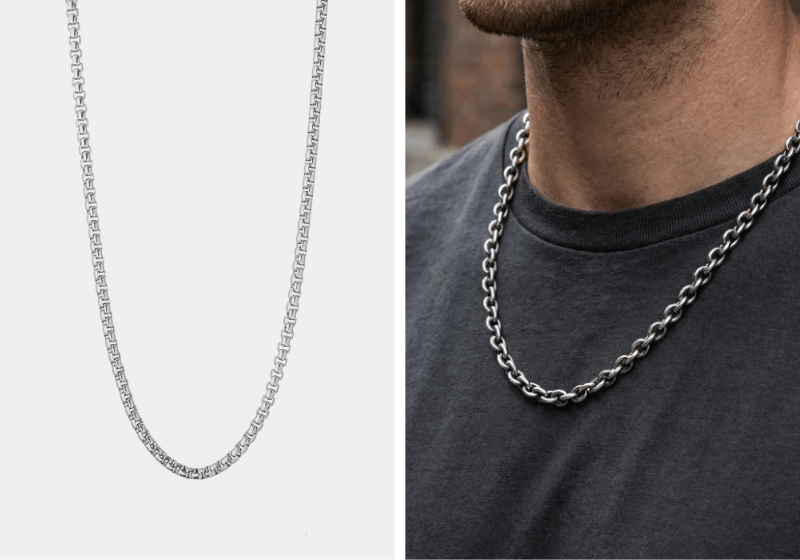
10. Paperclip Chain
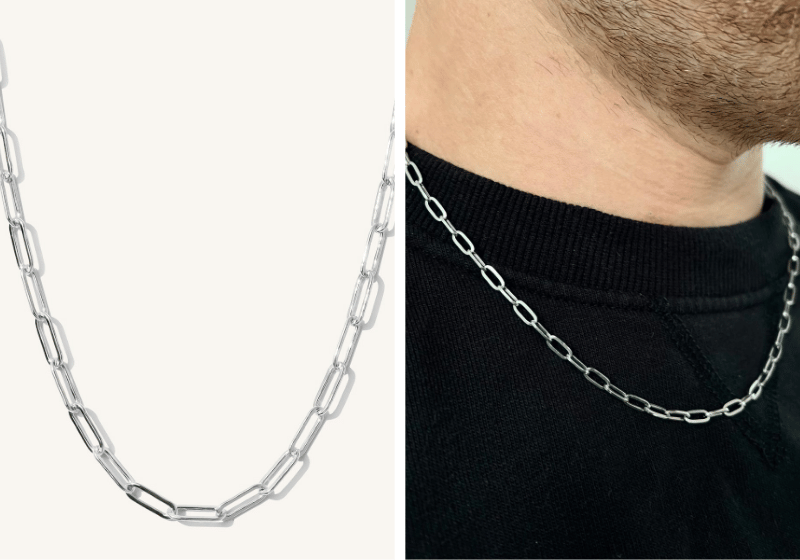
The paperclip chain features elongated rectangular links connected in a minimalist, open design. While trendy and lightweight, its structure creates fewer contact points between links, thereby reducing its overall strength. The elongated links are more vulnerable to bending or warping under pressure, making it one of the weaker chain types. However, it remains popular for its modern aesthetic.
Pros
- Lightweight and comfortable to wear
- Easy to layer with other chains
- Visually elongates the neckline
Cons
- Weak structure under stress
- Not durable for daily rough use
Best For
- Fashion-forward style
- Lightweight or decorative wear
Strongest Chain for Pendants
These are the strongest chain types you can pair with pendants, with an assurance that they will be maintain their durability:
- Cuban Chain: Thick interlocking links, ideal for heavy pendants
- Rope Chain: Twisted design offers durability for larger pendants
- Curb Chain: Sturdy and flat links that support heavier pieces
- Wheat Chain: Interwoven design balances strength and flexibility for medium-weight pendants
- Cable Chain: Simple, uniform links that securely hold lighter pendants
Most Comfortable Chains to Wear
These are the top types of jewelry chains that sit comfortably on your skin, with less likelihood of causing irritation or pulling hair:
- Box Chain: Smooth and flexible, perfect for all-day wear
- Figaro Chain: Lightweight and sits gently on the skin
- Rolo Chain: Rounded links provide comfort with durability
- Cable Chain: Simple structure ensures a smooth, non-restrictive fit
- Paperclip Chain: Elongated links feel light and comfortable
Factors That Influence Chain Strength
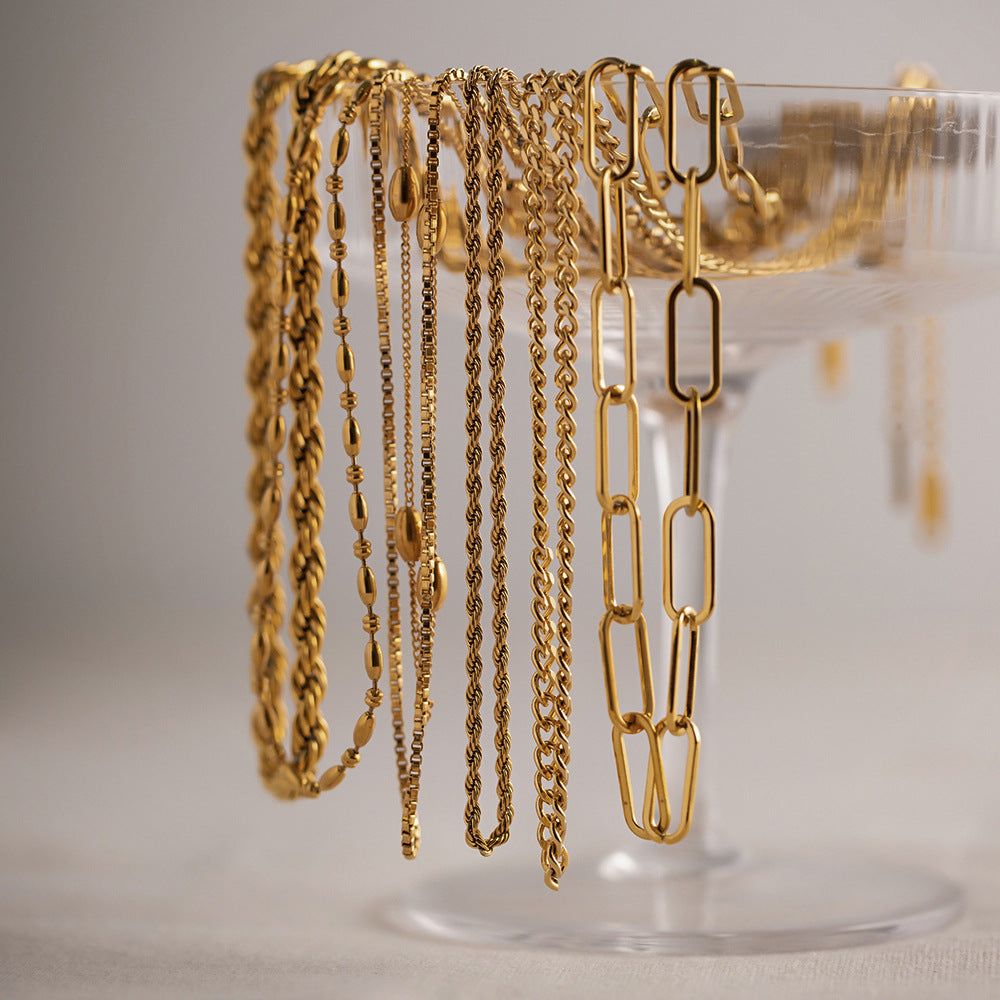
Chain strength isn’t random. Whether a chain can handle daily use or heavier pendants is determined by how the links are constructed, the metal used, and the craftsmanship quality.
Type of Links
Check the type of links used for the chain. Interlocked, welded, or twisted links distribute tension more evenly, thereby reducing weak points that could snap under pressure. In contrast, open or loosely connected links are prone to bending.
Also pay attention to the link shape and types of jewelry findings used. They determine how well the chain supports weight, especially when holding pendants or enduring frequent movement.
Metal Type and Thickness
The material and toughness of a chain significantly affect its performance under stress. Thicker chains made from durable metals offer better resistance to bending and breakage, while thinner ones are more fragile. For example, high-quality stainless steel necklace and pendants are typically stronger and more corrosion-resistant than softer metals.
Craftsmanship
Chains with independently soldered links are more secure because each connection is sealed, minimizing the risk of separation. Excellent craftsmanship ensures consistency, strength, and durability.
How to Choose the Right Chain for Your Jewelry Piece?
Here are some tips to help you choose the right chain for your jewelry piece, whether stainless steel jewelry, gold, silver, etc.
For Consumers
Select a chain based on pendant weight, daily usage, and personal style. Heavier pendants require stronger, thicker chains, while lightweight designs allow more flexibility. You should also prioritize your comfort and the occasion. Choose minimalist chains for casual wear or stronger chains for durability and bold look.
For Jewelry Brands
- Chains Lengths and Widths: Offer a wide range of chain lengths and thicknesses to meet diverse customer preferences. Standard options (like 16″, 18″, 20″, and 22″+) allows customers to have more options to choose from. You can also add a jewelry size guide on your website to help customers visualize how each chain fits. This is instrumental in reducing returns from incorrect sizing choices.
- Customization Options: One way to enhance customer satisfaction is by providing customization features. Offer options like engraving, adjustable lengths, and interchangeable clasps to allow them personalize their pieces. These additions create a more tailored experience, helping your brand stand out.
- Machine-Made vs. Handmade Chains: Choosing between machine-made and handmade chains depends on your brand positioning. Machine-made chains are efficient and cost-effective for mass production. In contrast, handmade chains offer better quality and uniqueness. While handmade chains are more expensive and time-consuming, they are best for customers seeking durability and long-lasting value.
Conclusion
Now that you know the top 10 types of jewelry chains (from the strongest to weakest), it’s imperative to mention that the perfect choice for you isn’t always the strongest. You should pick based on the chain’s durability, the occasion, and your preferred style. You can always contact a custom jewelry manufacturer to help you make the perfect piece that lasts long, suits the occasion, and matches your style.
FAQs
The strongest chain type is the Cuban chain because of its tightly interlocked link structure. This makes it distribute stress more evenly, reducing the chances of having any weak points.
The chains you can trust to not pull hair are: Box chains and Cable chains. They have smooth, tightly connected links, so no gaps for hair to get caught.
NO. Stainless steel chains contain chromium, an element that forms a protective oxide layer that prevents tarnishing. They perform far better than silver or lower-quality metals.
Yes, they are a reliable option for durability and affordability. They are relatively cheaper, resist corrosion, scratches, and tarnish better than many other metals.