Jewelry clasps (or closures) are essential components that connect and fasten chains, necklaces, and bracelets securely. Though small, these jewelry findings influence how easily a piece can be worn, the overall aesthetics of the design, and how practical it is for everyday use.
From simple spring rings to widely used lobster clasps, this guide explores 8 types of jewelry clasps, their features, and the jewelry designs they are best suited for.
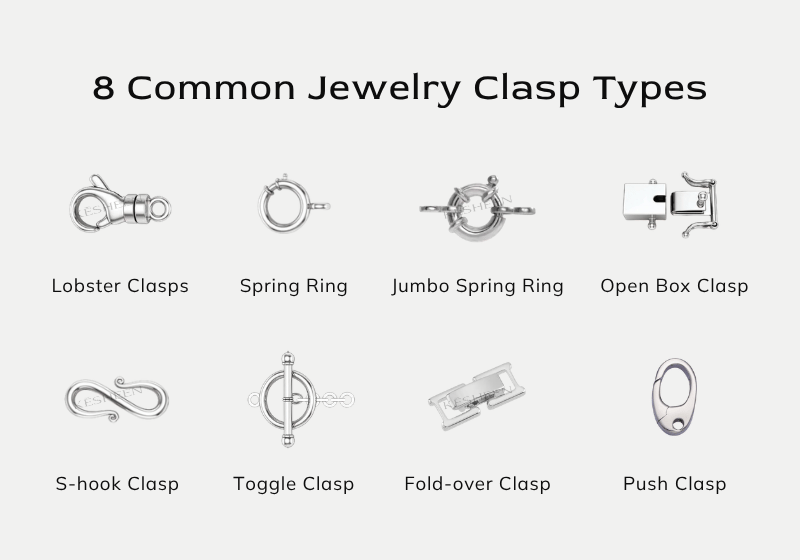
8 Common Types of Jewelry Clasps Explained
When choosing jewelry clasps, it’s also helpful to understand how they pair with different types of jewelry chains, since chain style can affect both durability and overall design. Before is a breakdown of the different types of jewelry clasps: how they work, their pros, cons, and ideal applications.
1. Lobster Clasp
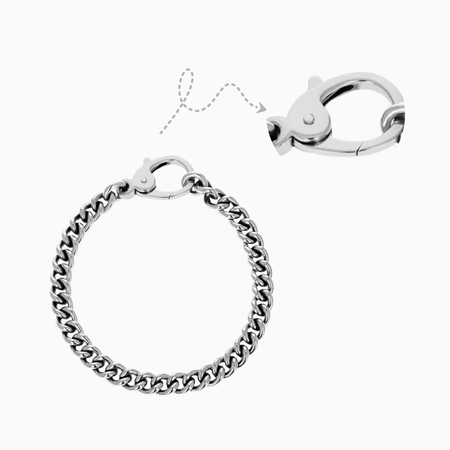
A lobster clasp is a popular jewelry fastener shaped like a small lobster claw. One end of the clasp is attached to a jump ring or chain link, while the other end is a fixed loop that’s permanently attached to the chain or bracelet. The clasp features a spring-loaded lever that opens when pressed, allowing you to join both ends together and closes automatically when released.
Pros
- Easy to open and close with the hand
- One of the most durable and suitable jewelry clasps types for daily wear
- It guarantees a strong and secure closure of jewelry pieces
Cons
- It is small and can be difficult to handle
- Spring mechanism may weaken over very long use
Best For
Everyday stainless-steel necklaces, bracelets, and anklets, as well as several medium-weight jewelry designs.
2. Spring Ring Clasp
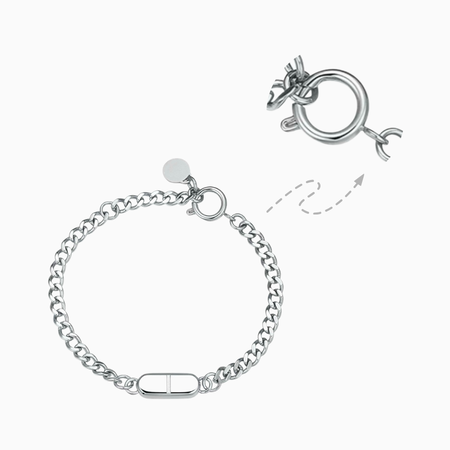
A spring clasp is a small, circular jewelry closure made of a hollow metal ring with a spring-loaded mechanism. It opens when a tiny lever is pulled back and closes when released, allowing a hook or jump ring to be inserted. Once released, the spring action snaps it shut to securely hold the jewelry in place.
Pros
- Affordable and widely available
- Blends easily into delicate jewelry
- It’s lightweight and has a minimal design
Cons
- Its small size can make it difficult to operate
- Less secure for heavy or thick jewelry
Best For
Lightweight necklace clasp types, fine chains, and simple pendant designs.
3. Jumbo Spring Ring Clasp
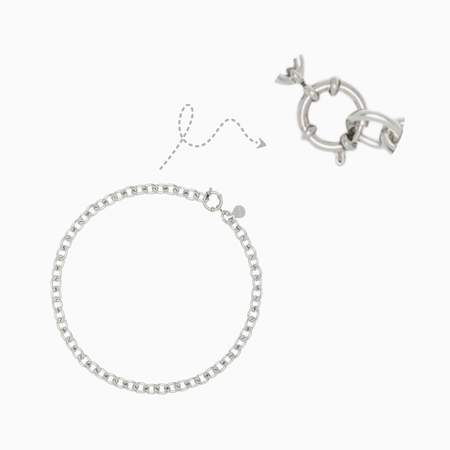
The jumbo spring ring clasp is a longer, larger, and sturdier version of the traditional spring ring clasp, offering better security and durability. It has a hollow circular body and an internal spring mechanism that opens when a side lever is pulled back and closes automatically when released. This allows it to hook onto a jump ring or chain link before snapping shut securely.
Pros
- Easier to handle due to larger size
- More secure than standard spring rings
- Suitable for slightly heavier jewelry
Cons
- Can feel bulky on delicate designs
- May rotate on the chain, affecting alignment of the clasp
Best For
Medium-weight stainless steel bracelets and necklace clasp types where extra security and easy handling are needed.
4. Open Box Clasp
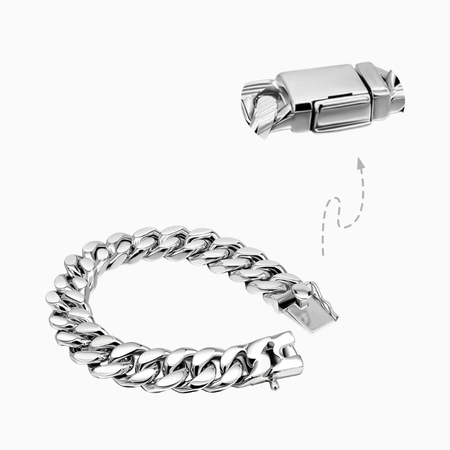
An open box clasp is a secure and elegant jewelry fastener made of a hollow box-shaped end and a thin metal tongue or tab. The tab slides into the box and locks into place with a small internal catch or click mechanism. When secured, it holds both ends tightly together until the release mechanism is pressed to open.
Pros
- Clean, elegant appearance
- Provides a secure and firm closure
- Works well for structured jewelry designs
Cons
- Can be difficult to open and close
- Not ideal for very delicate or flexible chains
Best For
Different types of bracelet clasps, rigid necklaces, and premium jewelry designs.
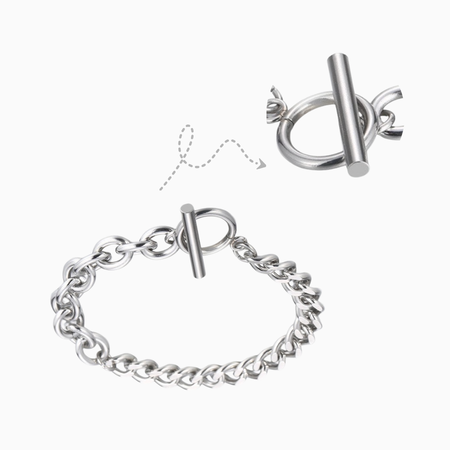
5. Toggle Clasp
A toggle clasp consists of a T-shaped bar and a ring. One end of the jewelry holds the ring, while the other is a decorative bar. To fasten it, the bar is inserted through the ring and turned sideways, where it rests across the opening and holds both ends together through tension and positioning.
Pros
- Easy and quick to fasten
- Decorative and often used as a design feature
- No small moving parts or springs
Cons
- Less secure under strong movement or tension
- Requires enough slack to pass the bar through
Best For
Different types of jewelry chains, necklaces, and bracelets where the clasp is part of the design, especially statement, artisan, or vintage-inspired pieces.
6. S-Hook Clasp
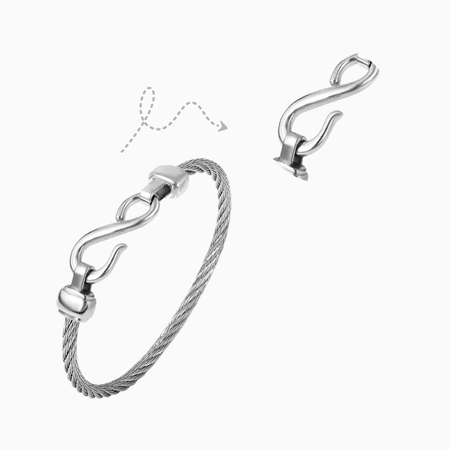
A S-hook clasp is a simple, open-ended metal fastener shaped like the letter “S”. This clasp type secures jewelry pieces by tension, as both ends sit tightly within the curved shape to stay in place. You gently pull the hook out to open it, and slide it back in to close.
Pros
- Very simple and easy to use
- Has minimal, lightweight design
- Adds a decorative, handcrafted look to the jewelry
Cons
- Can slip open if not properly tightened
- Less secure for active or daily wear
Best For
Light to medium-weight necklace & bracelet clasp types, beaded designs, rope & cable chains, and other decorative or artisan pieces.
7. Fold-Over Clasp
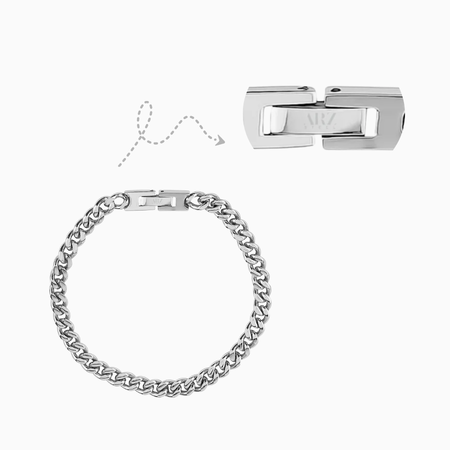
This is one of the most secure and reliable types of chain clasps. It features a hinged metal piece and a small cover that folds over a bar or catch to lock it in place. When closed, the hinged lid snaps down over the opposite end, securing both sides together. To open it, the lid is lifted back to release the catch and separate the ends.
Pros
- Very secure locking mechanism
- Sleek, low-profile appearance
- Less likely to open accidentally
Cons
- Can be difficult to open and close
- Hinged parts may wear over time
Best For
Heavy chains and different types of bracelet clasps, such as tennis bracelets, ID bracelets, watch bands etc.
8. Push Clasp
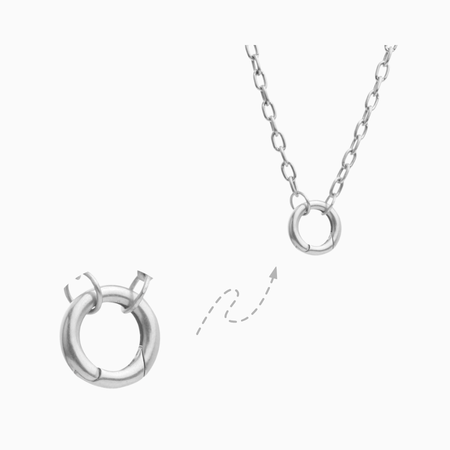
This jewelry closure connects two ends of a jewelry piece by sliding a pin or stem into a locking tube or socket. When pushed in, an internal mechanism in the clasp clicks into place to hold both ends together. To open it, you press a release button or pressure point that disengages the lock and separates the connection.
Pros
- Secure and reliable locking system
- Clean, seamless appearance
- Easy to align and close correctly
Cons
- Mechanism may loosen over time
Best For
Structured chain, necklace, and bracelet designs where a hidden or integrated clasp is preferred.
What Are the Strongest & Most Secure Types of Clasps?
Choosing the right jewelry clasp for daily wear often comes down to one question: What is the strongest type of clasp? Don’t worry, we got you.
Here are the strongest and most secure jewelry closure types:
- Open Box Clasp: is highly secure because the metal tab fits tightly into an enclosed box chamber. It then locks into place with the help of internal pressure or a latch, reducing accidental opening and keeping both ends firmly joined during wear.
- Lobster Clasp: is one of the strongest jewelry clasps thanks to its spring-loaded mechanism and fully enclosed hook design. This durable construction makes it reliable for different types of necklace clasps, bracelets, and medium-weight chains.
- Spring Ring Clasp: provides secure fastening through an internal spring mechanism that automatically snaps shut after opening. Its closed circular design also helps keep chains securely connected during everyday wear.
- Jumbo Spring Ring Clasp: It offers greater security than standard spring rings because of its larger, sturdier structure and stronger grip. The increased size also makes it easier to handle and supports slightly heavier jewelry designs more effectively.
Why Jewelry Clasp Matter for Chain, Necklace, & Bracelet?
Different types of jewelry finding play a role in the overall design and functionality of a jewelry piece, and clasps are no exception. Here are some reasons why they are essential components of every piece of jewelry.
- Function
Jewelry clasps keep pieces securely fastened, preventing accidental loss. They also support durability by maintaining a stable connection between jewelry components during regular movement and long-term wear.
- Design Impact
The clasp’s visibility (whether hidden or decorative) affects the overall aesthetics of the piece. It can blend seamlessly into the design (like a box clasp or spring ring clasp) or serve as a stylish focal detail (e.g. a toggle clasp).
- User Experience
Your chosen types of jewelry clasps and closures influence how easy your chains, necklace, and bracelets are to put on and remove. A well-designed clasp improves comfort and makes daily wear more convenient & hassle-free.
- Affect Product Quality
Though often seen as a small detail, the clasp reflects overall craftsmanship and quality level. A weak or cheap-looking clasp can reduce perceived value of a jewelry, while a secure, well-finished one enhances trust and makes the piece feel premium.
How to Choose the Right Clasp Type for Your Chain, Necklace, and Bracelet?
The right chain, necklace, or bracelet clasp types influence both the functionality and appearance of stainless-steel jewelry. Here are key factors to consider before choosing one.
Prioritize Ease of Use
Choosing an easy-to-operate clasp provides convenience during everyday wear, especially for people with long nails or limited finger dexterity. Larger or simple clasps, like the jumbo spring ring, are generally easier to handle, and they reduce difficulty when fastening or removing jewelry.
Material & Durability
Ensure the clasp material is strong and durable. Stainless steel and PVD gold coated clasps stand out for their durability, corrosion resistance, and affordability. Silver and brass clasps provide moderate durability but often require plating, while gold clasps are expensive and best suited for luxury pieces.
Jewelry Type & Weight Compatibility
The jewelry’s weight and type matter too. Heavy chains and bracelets require stronger clasps like lobster, box, or fold-over types for better support. But lightweight necklaces and delicate designs work better with smaller clasps, such as spring rings or S-hooks.
Design Aesthetics vs. Functionality Balance
Some clasps enhance the beauty of the jewelry as visible features, while others are hidden to maintain a clean and seamless overall appearance. Select one that complements the jewelry’s design without compromising function.
Conclusion
Jewelry clasps do more than fasten pieces together. They affect security, comfort, durability, and overall design, making them an important part of any chain, necklace, or bracelet. Since the different types of jewelry clasps offer distinct advantages, the right choice depends on the jewelry type, weight, and intended use.If you are unsure which clasp suits your jewelry best, consult a reliable custom jewelry manufacturer for expert guidance.