Many gold jewelry pieces may look similar at first glance, but their durability can vary greatly. Some can withstand water, sweat, and daily wear for years without losing their shine, while others fade, discolor, or tarnish much faster.
In this article, we will tell you what type of gold jewelry doesn’t tarnish and how to choose the right one for your brand.
Real-World Test: Which Gold Jewelry Actually Doesn’t Tarnish?
This real-world test compares how different gold jewelry performs under water, sweat, and environments like pools and oceans. With over a decade of jewelry manufacturing experience, we present each material’s tarnish resistance capacity, helping you quickly identify which pieces last in daily wear and which need extra care or must avoid water.
| Material | Tarnish-Resistant | Shower | Pool | Beach | Ocean | Waterproof |
| PVD Stainless Steel | ⭐⭐⭐⭐ | ✓ | ||||
| Solid Gold | ⭐⭐⭐⭐ | ✓ | ||||
| Gold Filled | ⭐⭐⭐⭐ | ✓ | ⚠ Better to take off or dry after use | ✓ | ✓ | ✓ |
| Gold Vermeil | ⭐⭐⭐ | ✓ | ✓ | ✓ | ✓ | |
| Gold-Plated | ⭐ | ✗ | ✗ | ✗ | ✗ | ✓ (Depending on materials and thickness; Ideal for daily water contact) |
Dig deeper: What Jewelry Can You Wear in the Pool & Ocean?
What Type of Gold Jewelry Doesn’t Tarnish Easily?
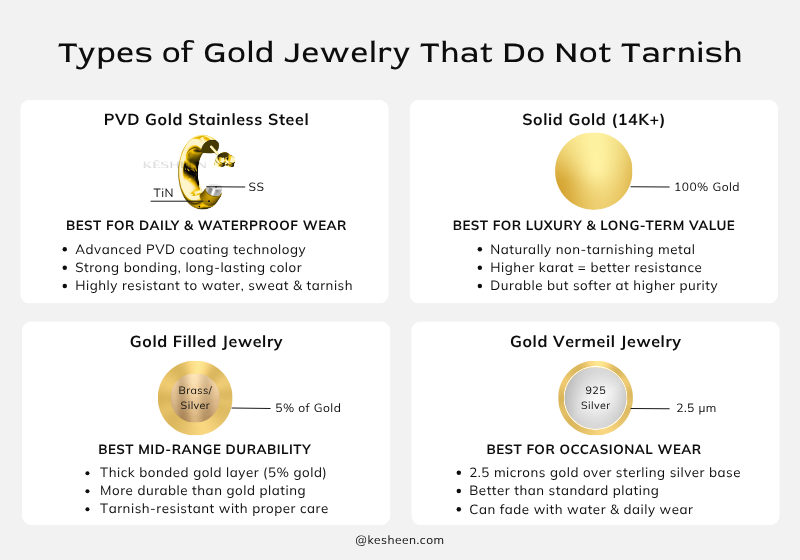
Common types of tarnish-free gold jewelry include PVD gold coated, solid gold, gold filled, and gold vermeil. They have different compositions and different resistance levels to tarnishing.
PVD Gold Coated Jewelry
This is mainly composed of stainless steel jewelry with a gold layer coating. The jewelry is made by using a vacuum coating process to bond titanium nitride onto the stainless steel base, and then coating it with a thin layer of gold (typically 0.03-0.08 microns). This process creates a PVD gold coated jewelry that has a highly durable surface that can resist sweat, water, and friction.
Solid Gold (14K and above)
Solid gold jewelry, especially 14K, 18K, and 22K, offers excellent tarnish resistance because gold itself is naturally non-reactive. Higher-karat gold contains more pure gold content, which reduces oxidation and the risk of the jewelry changing color. While 24K has the purest of gold content (99.9%), it’s too soft and incapable of making jewelry.
Gold Filled Jewelry
Gold filled jewelry contains a thick bonded layer of real gold that’s mechanically or chemically attached to a base metal core (usually brass). For a piece of jewelry to be called “gold filled,” the amount of gold in it must make up to a minimum of 5% of the total jewelry’s weight. This makes it able to resist tarnishing much better than ordinary gold-plated pieces.
Gold Vermeil Jewelry
Gold vermeil jewelry is composed of a sterling silver base and a thick layer of gold plating. This combination offers a balance between affordability and premium appearance. The gold plating is at least 2.5 microns thick, ensuring that the gold layer doesn’t wear off easily and the jewelry remains resistant to tarnish.
What are Other Jewelry Materials That Do Not Tarnish?
Other tarnish free jewelry materials include stainless steel, titanium, and palladium. These metals are naturally corrosion-resistant and perform well against water, sweat, and air exposure. PVD-coated stainless steel jewelry also offers strong color stability at a fraction of cost. For a deeper breakdown of material performance and care tips, see our guide on what jewelry materials do not tarnish and how to prevent tarnish.
What Does Tarnish-Free Gold Jewelry Really Mean?
Gold jewelry that doesn’t tarnish is not the same as jewelry that’s forever immune to wear, scratches, or fading. Rather, it refers to jewelry pieces that are designed for stronger resistance against oxidation, moisture, sweat, and daily exposure to dangerous elements.
Anti-tarnish jewelry pieces are usually made of durable base metals, thicker plating layers, advanced coating techniques, and protective finishes to improve their longevity.
Why Does Some Gold Jewelry Tarnish Faster than Others?
3 major factors influence what gold jewelry doesn’t tarnish and how fast those that tarnish do so. These factors include: the base metal, plating thickness & technology, and the environmental exposure.
Base Metal Matters
Some base metals (such as brass) react to the smallest touch of oxidation. Sterling silver can also oxidize naturally when exposed to air, especially without proper protective plating. Whereas, there are other base metals like stainless steel that are tougher, have better structural stability, and corrosion resistance.
Plating Thickness & Technology
Thin gold plating layers, like standard gold plated jewelry, tarnish quickly (within 6 months). But thicker gold plating, such as gold filled jewelry, can resist tarnishing for 3-5 years.
In comparing PVD vs electroplating, PVD offers better tarnish resistance due to its stronger coating bond and TiN layer. Under normal wear, PVD jewelry can maintain its color and shine for at least 2 years.
Environmental Exposure
Water, sweat, chlorine, saltwater, perfumes, lotions, and humidity can all speed up tarnishing and fading. Even high-quality gold jewelry may lose its shine faster when repeatedly exposed to harsh environments and daily chemical contact.
What Does Tarnished Gold Look Like?
Tarnished gold jewelry usually shows visible changes in shine, color, and surface condition before structural damage becomes noticeable.
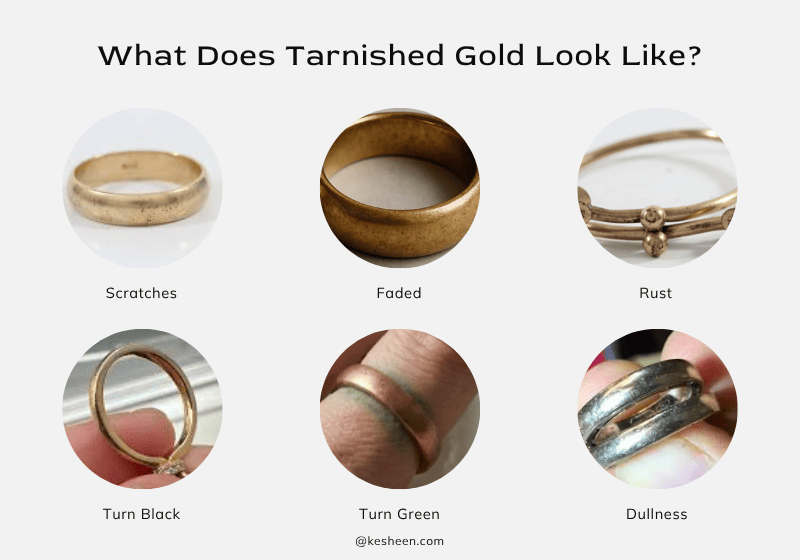
- Dullness: Tarnished gold jewelry gradually loses its reflective shine and polished appearance. The surface may appear faded, cloudy, or less vibrant due to oxidation or buildup from sweat & environmental exposure.
- Surface Scratches: As the protective layer weakens, scratches become more visible on the jewelry surface. Frequent friction from daily wear can quicken coating breakdown, making plated jewelry appear uneven over time.
- Turning Green/Black/Yellow: Low-quality base metals may react with moisture and body oils, causing discoloration. The jewelry can leave green marks on the skin, develop black oxidation spots, or show uneven yellow tones.
Inexpensive Gold Jewelry That Does Not Tarnish
The standout inexpensive gold jewelry that won’t tarnish is PVD gold coated stainless steel jewelry. It offers the best balance between price, durability, and tarnish resistance. PVD coating technology also improves the jewelry’s color retention significantly.
What is the Best Non-Tarnish Gold Jewelry for Your Brand?
There are different types of non-tarnish gold jewelry best suited for different brands. Below are the most reliable types and the brands they are perfect for:
Luxury Jewelry: Solid Gold
Solid gold is the optimal choice for luxury jewelry brands focused on heirloom quality, long-term value, and premium craftsmanship. It offers exceptional tarnish resistance, and it’s most valued for its intrinsic value, resale potential, and timeless appeal.
Semi-Fine Jewelry: Gold Filled
Gold filled jewelry works well for semi-fine jewelry brands seeking better durability than standard gold plating. Its thick bonded gold layer improves tarnish resistance, enhances longevity, and provides a more premium customer experience.
Fashion & Waterproof Jewelry: PVD Gold Coated
This is the best non-tarnish gold jewelry at a fraction of cost. It has become increasingly popular for fashion and waterproof jewelry collections because of its strong wear resistance, modern appearance, and affordability. Combined with stainless steel bases, PVD jewelry offers excellent durability for active lifestyles and maintains its shine with little maintenance.
Conclusion
In deciding what type of gold jewelry doesn’t tarnish for your brand, the most important thing you need to consider is your brand positioning. Solid gold is best for luxury brands, and it offers premium longevity. Gold filled is best for semi-fine brands, and it’s good for everyday jewelry. PVD gold coated jewelry is best for fashion brands, and it offers impressive waterproof durability.
If you are unsure which option to choose, consult a custom jewelry manufacturer to help you identify the most suitable gold jewelry for your brand.
FAQs
High-quality gold stainless steel jewelry, especially PVD coated stainless steel, doesn’t tarnish. Its corrosion-resistant base metal and durable coating help maintain color longer than traditional gold plated brass jewelry.
YES. Gold plated jewelry will tarnish over time because the thin layer of gold gradually wears away and exposes the base metal.
NO. Yellow ion plated stainless steel does not tarnish easily. It offers strong tarnish resistance because stainless steel naturally repels corrosion, and the ion plating process improves coating durability.
Gold vermeil jewelry can tarnish eventually if the gold layer wears down and exposes the sterling silver beneath. You must take care of it properly to extend its lifespan.
Standard gold plated jewelry may last about 6 months, depending on the plating thickness, how often it’s worn, environmental conditions, and maintenance habits.